
Premier Case Analysis

Speak to an attorney within 24 hours

Free Case Analysis

Reach out to our office to speak to an attorney

Premier Case Analysis

Speak to an attorney within 24 hours

Free Case Analysis

Reach out to our office to speak to an attorney

If you're facing legal challenges, you need straightforward answers and a lawyer who knows the landscape. With over a decade of hands-on experience in California courts, we help clients throughout the state navigate complex legal issues—confidently and efficiently.

The Next Legal Frontier: V2K & RF Psychological Defense

We represent clients facing voice-to-skull (V2K) targeting claims with strategic legal support. Our approach focuses on constitutional protections, mental health considerations, and due process.

License Defense

If your professional license is under threat, we help protect your career. We defend clients in administrative hearings, investigations, and license reinstatement matters across California.

Bankruptcy

We help individuals and families file for Chapter 7 or Chapter 13 bankruptcy, stop collections, and regain financial control—efficiently and with dignity.

A black and white icon of a house and a dollar sign.

Real Estate Litigation

We handle real estate disputes involving fraud, nondisclosure, breach of contract, and more. Our litigation practice is rooted in deep knowledge of California real estate law.

A black and white silhouette of a wheelchair on a white background.

Elder Law

We assist aging adults and their families with legal matters related to long-term care, conservatorship, financial protection, and estate planning—all with compassion and clarity.

A black and white icon of a stack of papers with a certificate.

Wills, Trusts & Estates

We draft clear estate plans—including wills, trusts, and powers of attorney—to protect your assets and ensure your wishes are honored.

A black and white icon of a family with two people and a child.

Family Law

From contested divorce and custody disputes to support enforcement and property division, we guide clients through high-stakes family matters with clear legal strategy.

A bottle of wine and a glass of wine on a white background.

DUI Defense

A DUI charge can affect every aspect of your life. We defend clients in DMV hearings and criminal court, aiming to protect your license, your record, and your future.

A black and white silhouette of a judge 's gavel on a white background.

Civil Law

We represent clients in a range of civil litigation matters, including contract disputes, fraud claims, and personal injury cases, always with a focus on practical outcomes.

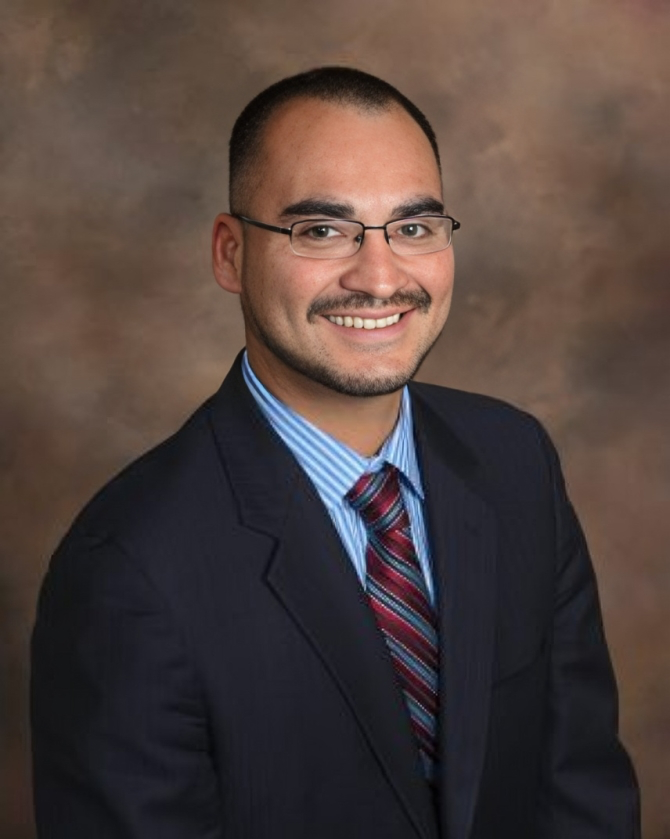
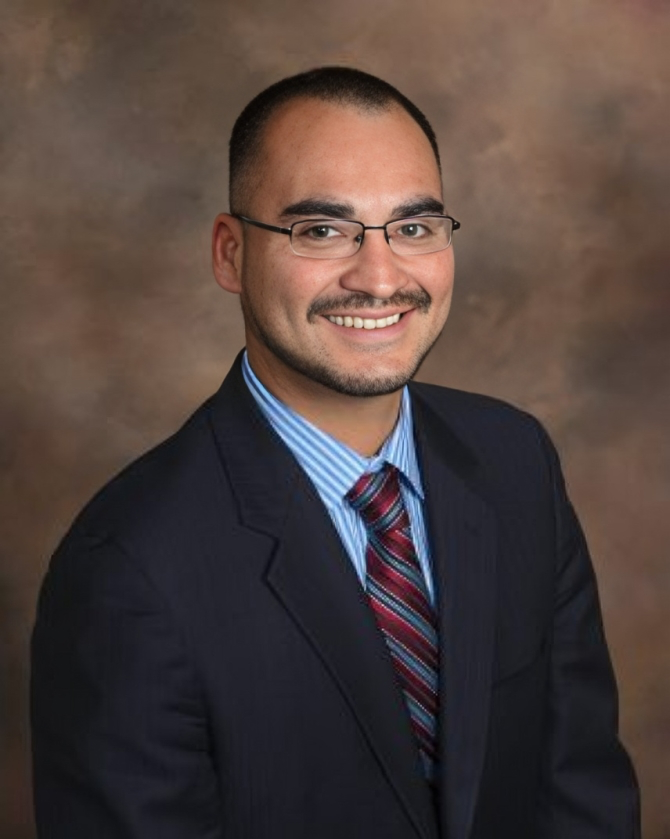
MIchael Benavides

Why Choose Michael Benavides Legal

With a background that includes working with reputable firms like Sacramento Law Group, attorney Michael Benavides has built a reputation for reliable, results-focused legal work.


Clients value our:

  • Courtroom experience across the Northern & Eastern Districts of California
  • In-depth knowledge of California’s legal procedures and court systems
  • Direct attorney-client relationships—no handoffs, no guesswork
  • Honest advice tailored to real-life decisions

Serving Clients Across California

We represent clients statewide. Whether you're dealing with bankruptcy, real estate litigation, or family law matters, we’re equipped to support you—no matter where you live in the state. From Northern California counties to Southern California cities, we provide reliable legal guidance wherever it's needed.

A pair of black quotation marks on a white background.
By Michael Benavides June 25, 2026
 Blue Data Law's plain-English guide to the digital rights Californians can actually use. Victoria: A reader wrote in shaken. Her ex always seemed to know where she'd been — the gym, a friend's house, a parking lot two towns over. She finally found a small white disc tucked in the spare-tire well of her car, and her iPhone had been quietly buzzing "AirTag Found Moving With You" for weeks before she understood it. That alert isn't a coincidence: Apple's support pages confirm iPhones running iOS 14.5 and later automatically notify you when an unknown AirTag travels with you over time — a feature Apple added specifically because the trackers were being misused to stalk people. So Michael, the question everyone's afraid to ask: is it actually illegal to plant a tracker on someone, or just creepy? Michael, Esq.: It's illegal, and California named it plainly. Penal Code § 637.7 says no person or entity in this state shall use an electronic tracking device to determine the location or movement of a person. The statute defines an "electronic tracking device" as any device attached to a vehicle or other movable thing that reveals its location or movement by the transmission of electronic signals. That language is broad on purpose — it captures a hardwired GPS box, a battery-powered tracker magnetized under a bumper, and yes, a consumer AirTag dropped into a purse, a coat pocket, or that spare-tire well. If it's stuck to something that moves and it phones home your location, it's covered. Victoria: What about consent? People say "it was my car" or "we share the account." Michael, Esq.: Consent is the whole ballgame, and the statute is specific about whose consent counts. Section 637.7 does not apply when the registered owner, lessor, or lessee of the vehicle has consented. So if your name is on the registration or the lease and you didn't agree, an ex putting a tracker on that car violates the law — it doesn't matter that you were married, that you share a Netflix login, or that he "just wanted to know you were safe." The one big carve-out is for lawful use by a law enforcement agency. A jealous partner is not a law enforcement agency. Victoria: And the penalty? Michael, Esq.: A violation of § 637.7 is a misdemeanor. That's the criminal hook — but for most victims the criminal charge is only one of several doors, and often not the one that gives you the most control. Victoria: Let's talk about phones, because not every tracker is a physical disc. "Stalkerware" apps — the ones an abuser secretly installs on your phone to read your texts, hear your calls, and watch your GPS — feel like a different animal. Michael, Esq.: They are a different animal legally, and that actually works in the victim's favor because more statutes pile on. Section 637.7 is written around a device attached to a movable thing , so a covert phone app can be a tougher fit there. But secretly installing software to intercept your communications and surveil you implicates California's eavesdropping and wiretap laws under the broader Invasion of Privacy Act, and — critically — it almost always fits the stalking statutes. Penal Code § 646.9 , the criminal stalking law, applies to a person who willfully, maliciously, and repeatedly follows or harasses another and makes a credible threat intended to place that person in reasonable fear for their safety or their family's safety. The statute expressly says a "credible threat" can be made through the use of an electronic communication device — texts, email, social-media messages — and that the threat can be implied by a pattern of conduct. Surveilling someone through their own phone and then using what you learn to menace them is the textbook pattern. Stalking under § 646.9 is a "wobbler" — it can be charged as a misdemeanor or a felony depending on the facts. Victoria: Here's the practical worry. Calling the police and waiting for a DA feels slow and out of the victim's hands. Can you actually use these rights yourself? Michael, Esq.: Yes — and California built a civil track precisely so victims don't have to wait on a prosecutor. Two statutes matter. First, Civil Code § 1708.7 , the tort of civil stalking. You can sue when the defendant engaged in a pattern of conduct intended to follow, alarm, place under surveillance, or harass you — "place under surveillance" is right in the statute, which is exactly what a tracker or stalkerware does — and as a result you reasonably feared for your safety or a family member's, or the defendant violated a restraining order. Know the evidence rule up front: you must support the pattern-of-conduct allegation with independent corroborating evidence. The recovered AirTag, the app, the location logs, the screenshots — that's your corroboration. A plaintiff can recover general, special, and punitive damages, and the court can grant an injunction. Second, Civil Code § 1708.8 , invasion of privacy. Its "constructive invasion of privacy" branch reaches someone who uses a device to capture images, recordings, or other impressions of you engaged in private or personal activity in a way offensive to a reasonable person. The remedies have teeth: up to three times your general and special damages, possible punitive damages, disgorgement of any proceeds if done for a commercial purpose, and a civil fine of $5,000 to $50,000. Victoria: Where does the restraining order fit? People often want the danger to stop before they think about a lawsuit. Michael, Esq.: That instinct is correct, and the statutes overlap by design. A civil harassment restraining order under Code of Civil Procedure § 527.6 — or a domestic violence restraining order if you have a qualifying relationship — can order the person to stop tracking you, stay away, and turn over or disable devices, often within days. And note the loop in § 1708.7: if the stalker then violates that order, the violation is itself a basis for the civil stalking tort. Protective order and damages suit reinforce each other. Victoria: What should someone do today , the moment they find a tracker or suspect an app? Michael, Esq.: Five steps. One — preserve evidence; don't smash the tracker or factory-reset the phone in a panic. Photograph the device where you found it, save the "AirTag Found Moving With You" notifications, and screenshot app lists, battery logs, and location history. Two — think about your safety before you disable anything; abusers sometimes escalate when they lose their feed. Three — file a police report referencing § 637.7 and § 646.9; the report number anchors everything later. Four — consider a restraining order to stop the conduct now. Five — talk to a lawyer about the civil claims under § 1708.7 and § 1708.8 while the trail is fresh, because corroborating evidence is the heart of the case. Victoria: The honest limits? Michael, Esq.: Be candid about consent and ownership — a tracker on a car titled solely to the other person, with no surveillance of you , is a harder case. Civil stalking demands independent corroboration, so a hunch alone won't carry it. These are criminal and tort statutes, not magic; outcomes turn on facts and evidence. This is general information, not legal advice — but if something is following you, you have real, usable rights, and you don't have to figure out which one to pull alone. Victoria: If a tracker or an app is shadowing you, Blue Data Law will help you map the right move — criminal report, restraining order, civil suit, or all three. Free consultation: (707) 362-4166. Attorney Advertising. Blue Data Law is a brand of the law practice of Michael Benavides, Esq. (State Bar of California #270714). "Victoria" is an editorial brand voice and narrative persona — not an attorney — and does not provide legal advice; all legal analysis is provided by Michael Benavides, Esq. This article is general information only, is not legal advice, and does not create an attorney–client relationship. Laws change and some statutes referenced may be subject to litigation; verify current status before relying on them. Serving Sacramento and Northern California. Free consultation: (707) 362-4166. Sources: - Penal Code § 637.7 — https://leginfo.legislature.ca.gov/faces/codes_displaySection.xhtml?sectionNum=637.7.&lawCode=PEN - Penal Code § 646.9 — https://leginfo.legislature.ca.gov/faces/codes_displaySection.xhtml?sectionNum=646.9&lawCode=PEN - Civil Code § 1708.7 — https://leginfo.legislature.ca.gov/faces/codes_displaySection.xhtml?lawCode=CIV§ionNum=1708.7. - Civil Code § 1708.8 — https://leginfo.legislature.ca.gov/faces/codes_displaySection.xhtml?lawCode=CIV§ionNum=1708.8. - Code of Civil Procedure § 527.6 (civil harassment restraining orders) — https://leginfo.legislature.ca.gov/faces/codes_displaySection.xhtml?lawCode=CCP§ionNum=527.6. - Apple, "Get help with an unknown AirTag or Find My accessory" / AirTag safety notifications — https://support.apple.com/en-us/102558
By Michael Benavides June 25, 2026
 Blue Data Law's plain-English guide to the digital rights Californians can actually use. Victoria: Here's a creepy fact most people never think about. There are companies you've never heard of, never signed up with, and never spoken to — and they have your name, address, phone, family details, shopping habits, maybe your location history — all packaged up and sold. They're called data brokers. California now keeps an official registry of them, and brokers who fail to register face fines of $200 per day . So the state knows who these companies are. The question is: can you make them delete you? Michael, Esq.: As of this year, yes — and in a way no other state has matched. The law is the California Delete Act , Senate Bill 362 , signed by Governor Newsom on October 10, 2023 . It amended and added sections of the California Civil Code starting at § 1798.99.80 . The Delete Act does something genuinely new: instead of forcing you to chase down hundreds of data brokers one at a time, it directs the California Privacy Protection Agency — the CPPA, sometimes branded "CalPrivacy" — to build a single, one-stop deletion tool . Victoria: One request, all the brokers. What's it called? Michael, Esq.: DROP — the Delete Request and Opt-out Platform . You make one verified request through DROP, and every data broker registered with the state is required to find your information, delete it, and stop selling it. You don't have to know who they are. You don't have to fill out hundreds of forms. The platform pushes your single request out to all of them. Victoria: That sounds almost too good. Is it actually live, or is this one of those "coming soon" laws? Michael, Esq.: It's real, and the rollout has two key dates — both important, and both in 2026. First: DROP became available to consumers on January 1, 2026. The regulations implementing it took effect the same day. So you can go register and submit your deletion request right now. Second — and this is the one to mark on your calendar — data brokers are required to begin honoring deletion requests through DROP starting August 1, 2026. Victoria: So between now and August 1, I can file the request, but brokers don't have to act on it yet? Michael, Esq.: That's the honest framing. The consumer-facing portal is open now, January 1, 2026. The hard obligation on brokers to process and honor those requests kicks in August 1, 2026 . After that, brokers must check the DROP platform at least once every 45 days and delete the personal information of every consumer who's submitted a request — on an ongoing basis. So filing early means you're in the queue the moment the obligation goes live. Victoria: Let me back up to the brokers themselves. How does the state even know who they are? Michael, Esq.: Through mandatory registration . Under the Delete Act, any business that qualifies as a data broker must register with the CPPA every year . The deadline is January 31 annually, and there's a registration fee. The Delete Act moved this registry from the Attorney General's office to the CPPA and expanded what brokers must disclose. A "data broker," by the way, is defined in Civil Code § 1798.99.80 as a business that knowingly collects and sells to third parties the personal information of a consumer with whom the business does not have a direct relationship . That last part is the key — these are companies you never dealt with directly. Victoria: And if they don't register? Michael, Esq.: $200 per day in penalties for failing to register on time, plus administrative fines. The CPPA has stood up a dedicated Data Broker Enforcement Strike Force to go after non-compliant brokers. The state is taking this seriously. Victoria: Where does this fit with the privacy laws people have already heard of — the CCPA, CPRA? Michael, Esq.: The Delete Act builds on both, and it fills a real gap. The CCPA (the California Consumer Privacy Act) and the CPRA (which strengthened it) already give you the right to ask a business to delete personal information it collected from you directly . But that only works when you know who has your data and had a relationship with them. Data brokers are exactly the companies you never dealt with — so the old "go ask each company yourself" model broke down. The Delete Act's DROP platform closes that gap: it lets you reach the brokers you'd never be able to find on your own, through one centralized request. Victoria: So CCPA/CPRA is "delete what I gave you ," and the Delete Act is "delete what brokers scraped about me from everywhere else ." Michael, Esq.: That's a clean way to say it. They stack. You still have your CCPA/CPRA rights against businesses you deal with directly, and now you have DROP for the broker ecosystem behind the curtain. Victoria: The honest limits — what does this not do? Michael, Esq.: A few things. One: DROP reaches registered data brokers . It is not a magic erase button for the entire internet — it doesn't delete your social media, your bank, or businesses you have a direct relationship with (those fall under CCPA/CPRA and their own processes). Two: there are lawful exceptions — brokers can retain certain information where the law requires or permits it (for example, certain legal, security, or compliance purposes). Three: timing. The portal is open now, but the enforceable deletion obligation starts August 1, 2026 , and deletion is ongoing rather than instantaneous. Patience and follow-through matter. Victoria: Okay — can you actually use it? Walk me through the real steps. Michael, Esq.: Step one: go to the CPPA / CalPrivacy DROP portal and create a verified request. The official information lives at cppa.ca.gov and privacy.ca.gov . You'll verify your identity so brokers delete the right person. Step two: submit your single deletion request — that one request fans out to all registered brokers. Step three: know the dates. The portal is live as of January 1, 2026 ; brokers must honor requests beginning August 1, 2026 and must check the platform at least every 45 days thereafter. Step four: if a broker that's required to comply ignores a valid request after the obligation date, that's an enforcement matter for the CPPA — and potentially the kind of pattern worth bringing to a lawyer. Victoria: And what should someone do today ? Michael, Esq.: Don't wait for August. File your DROP request now , while the portal is open, so you're in the system when the obligation goes live. Keep a record — screenshot your confirmation, note the date you filed. Separately, exercise your CCPA/CPRA deletion rights with the companies you do deal with directly. And if you're someone with a real safety concern — a stalking victim, a domestic-violence survivor, anyone trying to get their address off the market — getting into DROP early is one of the most concrete privacy steps available in California right now. Victoria: If brokers are profiting off your private information and you want help getting it deleted — or you've hit a wall with a company that's ignoring your rights — Blue Data Law works in California's privacy and data-rights space. Free consultation: (707) 362-4166 . Sources: - CPPA — About DROP and the Delete Act — https://privacy.ca.gov/drop/about-drop-and-the-delete-act/ - CPPA — DROP System Requirements / regulations — https://cppa.ca.gov/regulations/drop.html - CPPA — Information for Data Brokers — https://cppa.ca.gov/data_brokers/ - SB 362 (Delete Act) full text — https://leginfo.legislature.ca.gov/faces/billTextClient.xhtml?bill_id=202320240SB362 - CPPA — Data Broker Registration Enforcement Advisory (Dec 2025) — https://cppa.ca.gov/announcements/2025/20251217.html Attorney Advertising. Blue Data Law is a brand of the law practice of Michael Benavides, Esq. (State Bar of California #270714). "Victoria" is an editorial brand voice and narrative persona — not an attorney — and does not provide legal advice; all legal analysis is provided by Michael Benavides, Esq. This article is general information only, is not legal advice, and does not create an attorney–client relationship. Laws change and some statutes referenced may be subject to litigation; verify current status before relying on them. Serving Sacramento and Northern California. Free consultation: (707) 362-4166.
By Michael Benavides June 25, 2026
 Blue Data Law's plain-English guide to the digital rights Californians can actually use. Victoria: Let me start with the scenario I hear most. Someone finds out their ex — or a coworker, or a "friend" — was quietly recording their private conversations. Phone calls. A talk in the kitchen. A Zoom that was supposed to be just the two of them. The first reaction is always the same: "That's gotta be illegal, right? But what can I actually do about it?" That second question is the one nobody answers. So today we answer it. Michael, Esq.: And it's the right question, because in California the answer is unusually strong. People assume privacy law is all talk and no teeth. Here it has teeth. California is an all-party-consent state — sometimes called a "two-party consent" state. The core criminal statute is California Penal Code § 632 , part of the California Invasion of Privacy Act. It makes it a crime to intentionally record, or eavesdrop on, a confidential communication without the consent of all parties to it. Victoria: "All parties." So if three of us are on a call, you'd need all three of us to agree before anyone hits record? Michael, Esq.: Correct. Not the majority. Not the host. Everyone. If even one party hasn't consented, recording a confidential communication can be a violation. Under § 632 it's a "wobbler" — chargeable as a misdemeanor or a felony — and the fine is up to $2,500 per violation , with possible jail time. A repeat offender faces a fine up to $10,000 per violation . That's the criminal side, prosecuted by the state. Victoria: Define "confidential communication," because I think that's where people get tripped up. Is every conversation protected? Michael, Esq.: No, and this is the most important limit to understand. The statute protects a communication carried on in circumstances that reasonably indicate a party wants it confined to the parties — in other words, where you have a reasonable expectation of privacy . The law expressly excludes communications made in a public gathering, in a legislative, judicial, or administrative proceeding open to the public, or in any circumstance where the parties could reasonably expect the conversation might be overheard or recorded . Victoria: Give me the everyday translation. Michael, Esq.: A private phone call from your living room? Protected. A closed-door conversation in your home or a private office? Protected. A Zoom or video call set up as a private meeting? Protected — the medium doesn't matter, the privacy expectation does. But two people shouting across a crowded restaurant, a speech at a public rally, comments in a city council meeting open to the public? Not confidential. You can't reasonably expect privacy when strangers are within earshot. The test is the expectation , not the room. Victoria: Here's the one that hits home for a lot of people — the ex or the partner with hidden recordings. A nanny cam in the bedroom. A phone left recording on the counter. A spouse secretly taping arguments to use later. Michael, Esq.: That's the heart of § 632. Secret recordings by a partner, ex, or roommate of private, in-home conversations are exactly the fact pattern the statute was built for. The fact that they once shared the space, or once had a relationship, does not give them consent to record private conversations forever. And there's an audio nuance worth knowing: a silent security camera that captures only video may be analyzed differently from one that records audio of a confidential conversation . The Invasion of Privacy Act is about the confidential communication — the sound, the words. The moment a device captures the audio of a private conversation without everyone's consent, you're squarely in § 632 territory. Victoria: Okay. The question everyone actually came for: can you actually use it? If this happened to me, what's my remedy? Michael, Esq.: This is where California stands out. Beyond the criminal fine, there is a civil remedy — and you, the injured person, control it. It's California Penal Code § 637.2 . It lets the person whose communication was illegally recorded sue and recover the greater of : (1) $5,000 per violation , or (2) three times the amount of actual damages sustained. Victoria: Wait — three times actual damages or $5,000, whichever is bigger? Michael, Esq.: Whichever is greater . And here's the part that surprises people: § 637.2 expressly says it is not a prerequisite that the plaintiff suffered, or was threatened with, actual damages. You do not have to prove you lost a dime. The illegal recording itself is the injury. So even if you can't point to a financial loss, the $5,000 statutory floor is your anchor. The statute also lets you seek an injunction to stop ongoing violations. Victoria: Per violation. So multiple recordings could mean multiple $5,000 amounts? Michael, Esq.: Potentially. The Legislature added the words "per violation" to the $5,000 figure effective January 2017. Now, I'll be straight with you — courts have disagreed over whether "per violation" means per illegal recording or per lawsuit, and that fight is still live. So I never promise a client a multiplier. What I can say with confidence is that the $5,000 statutory anchor exists , it doesn't require proof of economic loss, and treble actual damages are available on top if you can show real harm. Victoria: Who do you actually sue? Michael, Esq.: The person who did the recording. If a business or employer directed or used it, they may be in the case too. You file a civil action in California Superior Court. Separately, you can report the criminal conduct to law enforcement — the criminal and civil tracks are independent. You don't have to choose; the criminal fine goes to the state, the § 637.2 money goes to you. Victoria: Is there a deadline? Michael, Esq.: Yes, and it's short — do not sleep on this. A § 637.2 claim is generally treated as an action on a statutory penalty , which carries a one-year statute of limitations under California Code of Civil Procedure § 340(a). The clock typically starts when you discover the violation. One year goes fast. If you think you've been secretly recorded, talk to a lawyer quickly. Victoria: And the honest limits? Michael, Esq.: Three. First, public settings aren't covered — no reasonable expectation of privacy, no claim. Second, consent is a complete defense — if everyone genuinely agreed, there's no violation. Third, the "per violation" multiplier is contested , so don't bank on a windfall; bank on the $5,000 floor and treble actual damages. Within those limits, this is one of the most usable privacy rights an ordinary Californian has. Victoria: Last thing — what do I do today if I think it happened to me? Michael, Esq.: Preserve the evidence. Don't delete texts, voicemails, or emails where the person admits to recording. Screenshot anything showing the device, the file, or a confession ("I have it on tape"). Note dates, times, and who was present for each conversation. Write down where each conversation happened and why you expected privacy. Then call a lawyer before that one-year clock runs. Evidence and timing win these cases. Victoria: If you're sitting there realizing someone may have been recording you, don't wait. Blue Data Law handles California privacy and secret-recording matters. Book a free consultation: (707) 362-4166 . Sources: - Cal. Penal Code § 632 — https://leginfo.legislature.ca.gov/faces/codes_displaySection.xhtml?lawCode=PEN§ionNum=632 - Cal. Penal Code § 637.2 — https://leginfo.legislature.ca.gov/faces/codes_displaySection.xhtml?lawCode=PEN§ionNum=637.2. - California Invasion of Privacy Act (Pen. Code §§ 630–638) — https://leginfo.legislature.ca.gov/faces/codes_displayText.xhtml?lawCode=PEN&part=1.&title=15.&chapter=1.5 - CACI No. 1809 (Recording of Confidential Information) — https://www.justia.com/trials-litigation/docs/caci/1800/1809/ - CIPA statute of limitations (CCP § 340(a)) — https://privacyrights.org/resources-tools/law-overviews/california-invasion-privacy-act-cipa Attorney Advertising. Blue Data Law is a brand of the law practice of Michael Benavides, Esq. (State Bar of California #270714). "Victoria" is an editorial brand voice and narrative persona — not an attorney — and does not provide legal advice; all legal analysis is provided by Michael Benavides, Esq. This article is general information only, is not legal advice, and does not create an attorney–client relationship. Laws change and some statutes referenced may be subject to litigation; verify current status before relying on them. Serving Sacramento and Northern California. Free consultation: (707) 362-4166.
Caffeine Law — bankruptcy and credit-score recovery for Sacramento and Northern California families
By Michael Benavides June 22, 2026
 A default can drop a score by a hundred points. The counterintuitive truth: bankruptcy is often where recovery begins.
Caffeine Law — escaping the credit-card minimum-payment trap with bankruptcy in Sacramento and North
By Michael Benavides June 22, 2026
A record share of cardholders pay only the minimum, and 13% of balances are 90+ days late. A California bankruptcy attorney explains the trap and the way out.
Caffeine Law — escaping the credit-card minimum-payment trap with bankruptcy in Sacramento and North
By Michael Benavides June 22, 2026
Credit-card 90-day delinquency hit a 15-year high in 2026. Escape the minimum-payment trap. Michael Benavides, Esq. $900 BK, conditions apply. 707-362-4166.
Caffeine Law — Sacramento bankruptcy filing surge and Chapter 7 vs Chapter 13 options for California
By Michael Benavides June 22, 2026
Consumer bankruptcy filings rose 12% in 2025. What the surge means for your decision. Michael Benavides, Esq., Sacramento Law Group. $900 BK, conditions apply. 707-362-4166.
Caffeine Law — student loan default and bankruptcy options for Sacramento and Northern California fa
By Michael Benavides June 22, 2026
2.6M defaulted on student loans in Q1 2026. What bankruptcy can & can't do for Sacramento families. Michael Benavides, Esq. $900 BK, conditions apply. 707-362-4166.
By Michael Benavides June 20, 2026
California Eviction Plain English Ava Asks Michael Answers 12 Tenant. Tenant guidance from Michael Benavides, Esq., Sacramento. Free consult 707-362-4166.
By Michael Benavides June 20, 2026
The Costly Divorce Mistakes Each Side Makes Most California. Family law guidance from Michael Benavides, Esq., California. Free consult 707-362-4166.
Show More